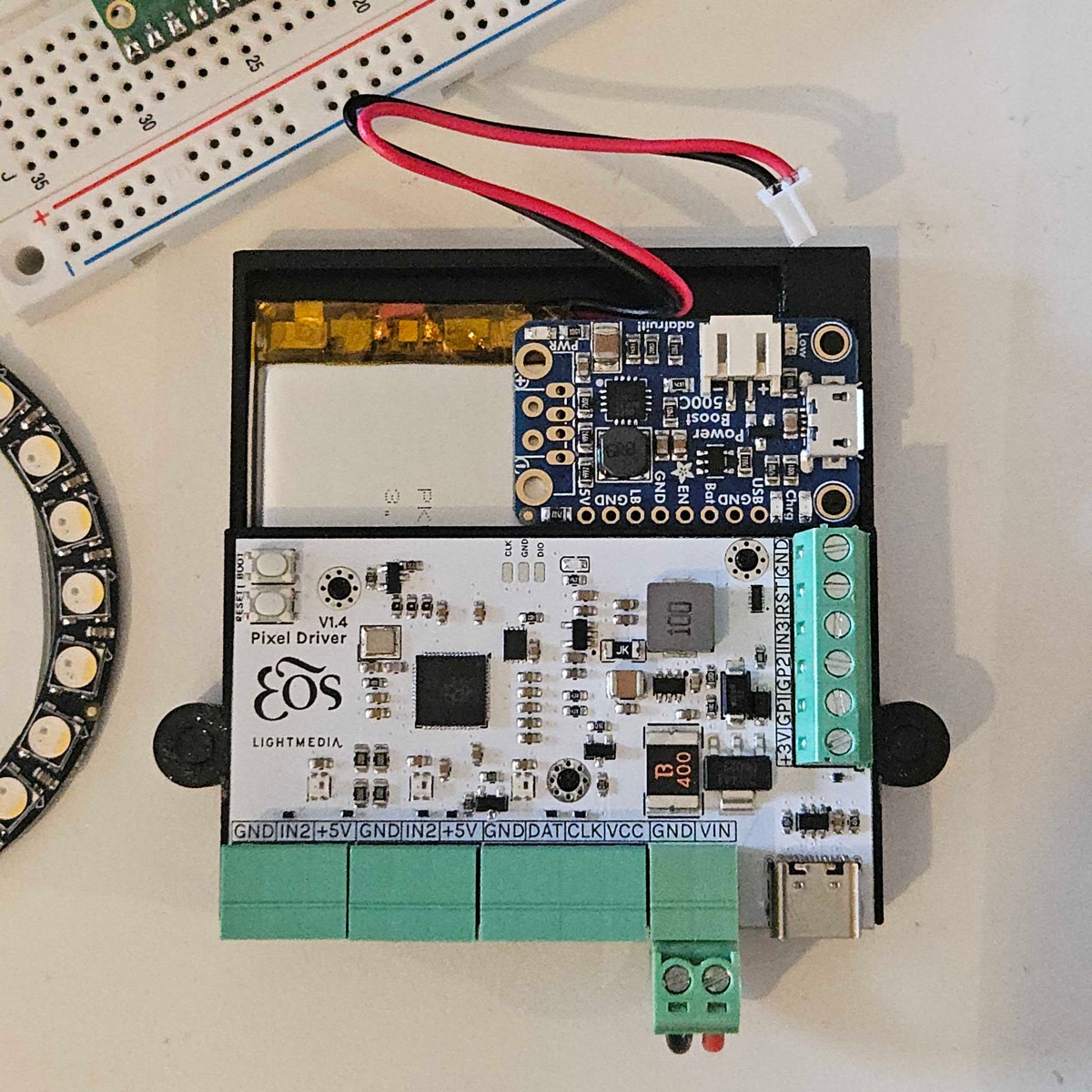
Eos Lightmedia · Hardware
Embedded pixel control for permanent installations. No PC. No network. No single point of failure. Wire it, power it, leave it — it runs at 60 fps, unattended, for years.
The Eos Pixel Driver generates and outputs real-time lighting scenes directly on-device. Drop a scene file onto it over USB, wire it to your fixtures, and walk away.

Scene generation runs directly on the embedded processor. There is no Windows box in a closet to reboot, no GPU driver to update, no license server to maintain. Power it, and it runs. That is the entire operations model for a permanent installation.
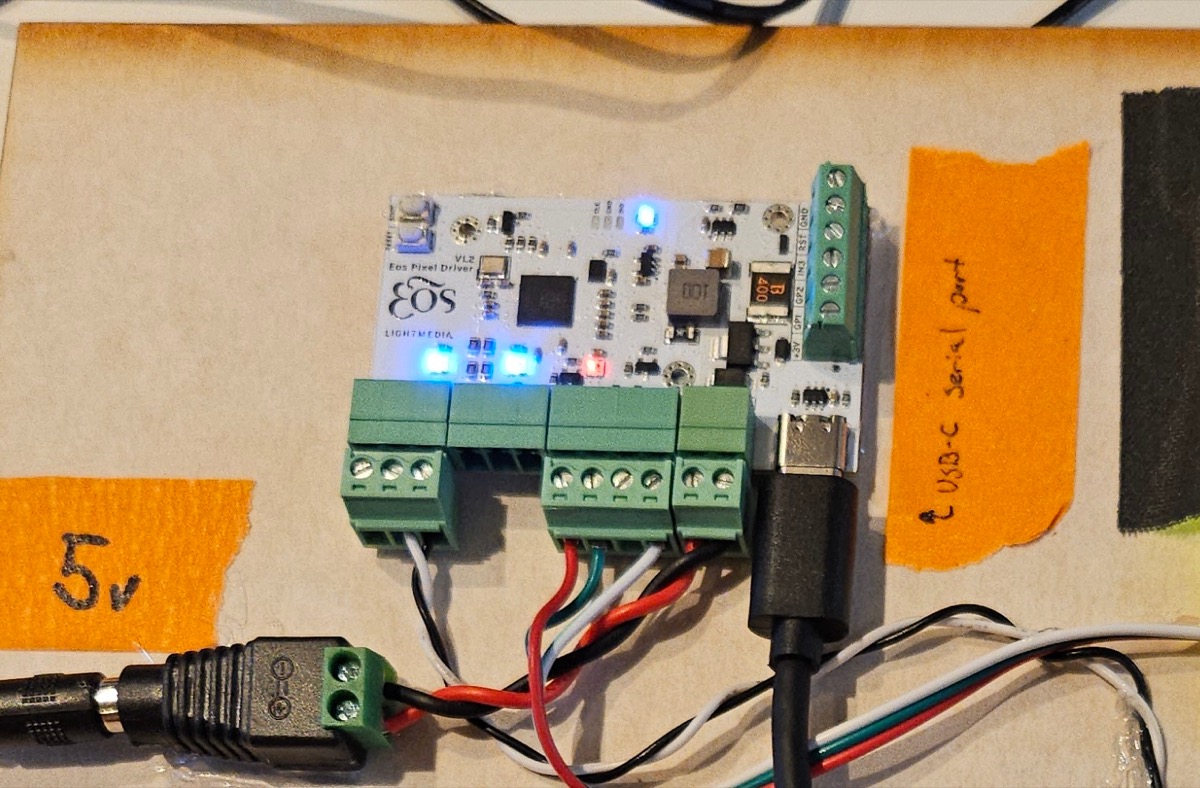
Connect via USB-C and the device mounts as a standard drive. Drop a scene file onto it, reset, and the new scene is running. Firmware updates work the same way — no proprietary software, no flashing tools, no special procedure.
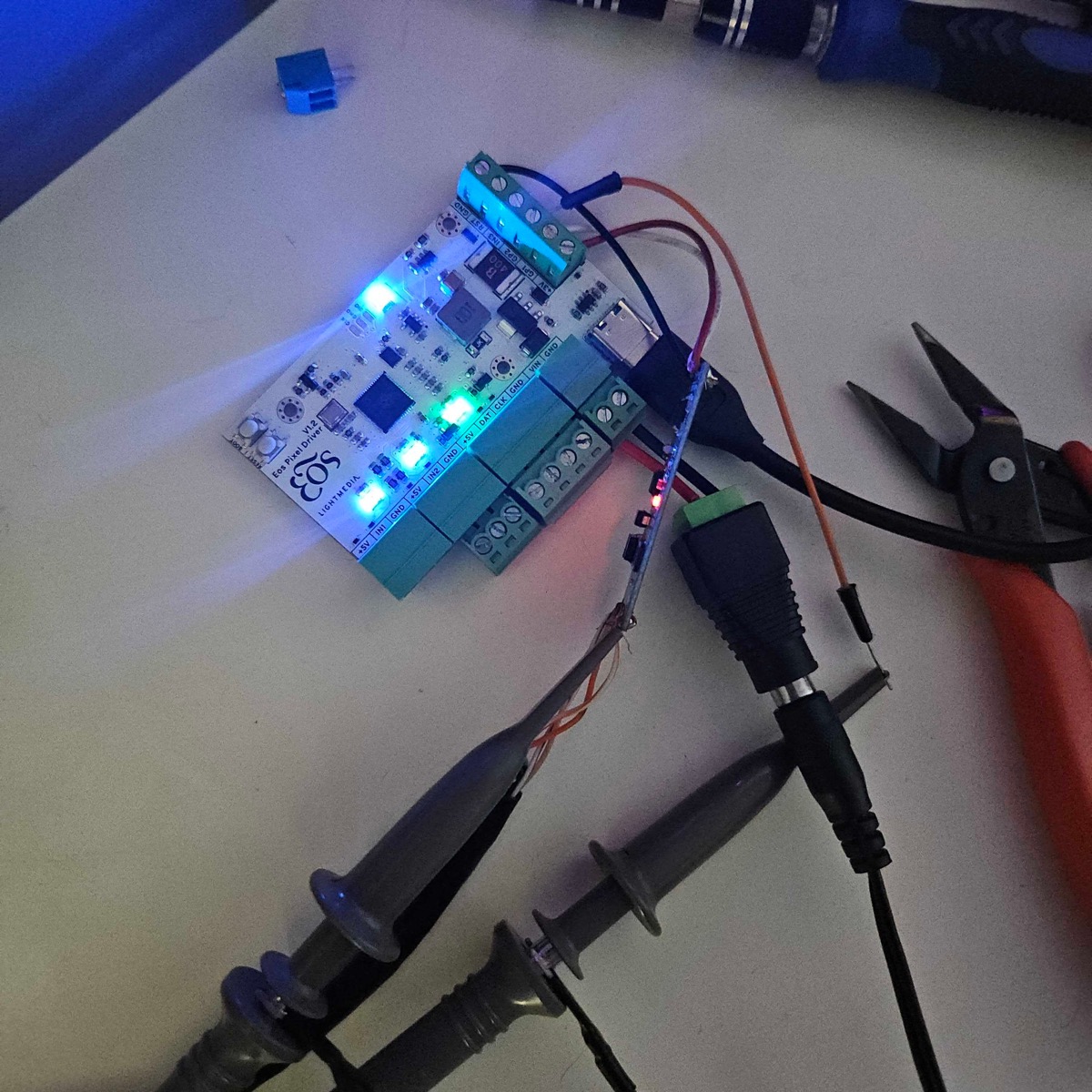
Two 0–5 V analog inputs accept signals from sensors, potentiometers, or control systems. A serial port accepts commands from PLCs, touch panels, and media servers. The driver runs its scene autonomously while external signals shape the behavior. Upstream goes quiet? The show still goes on.
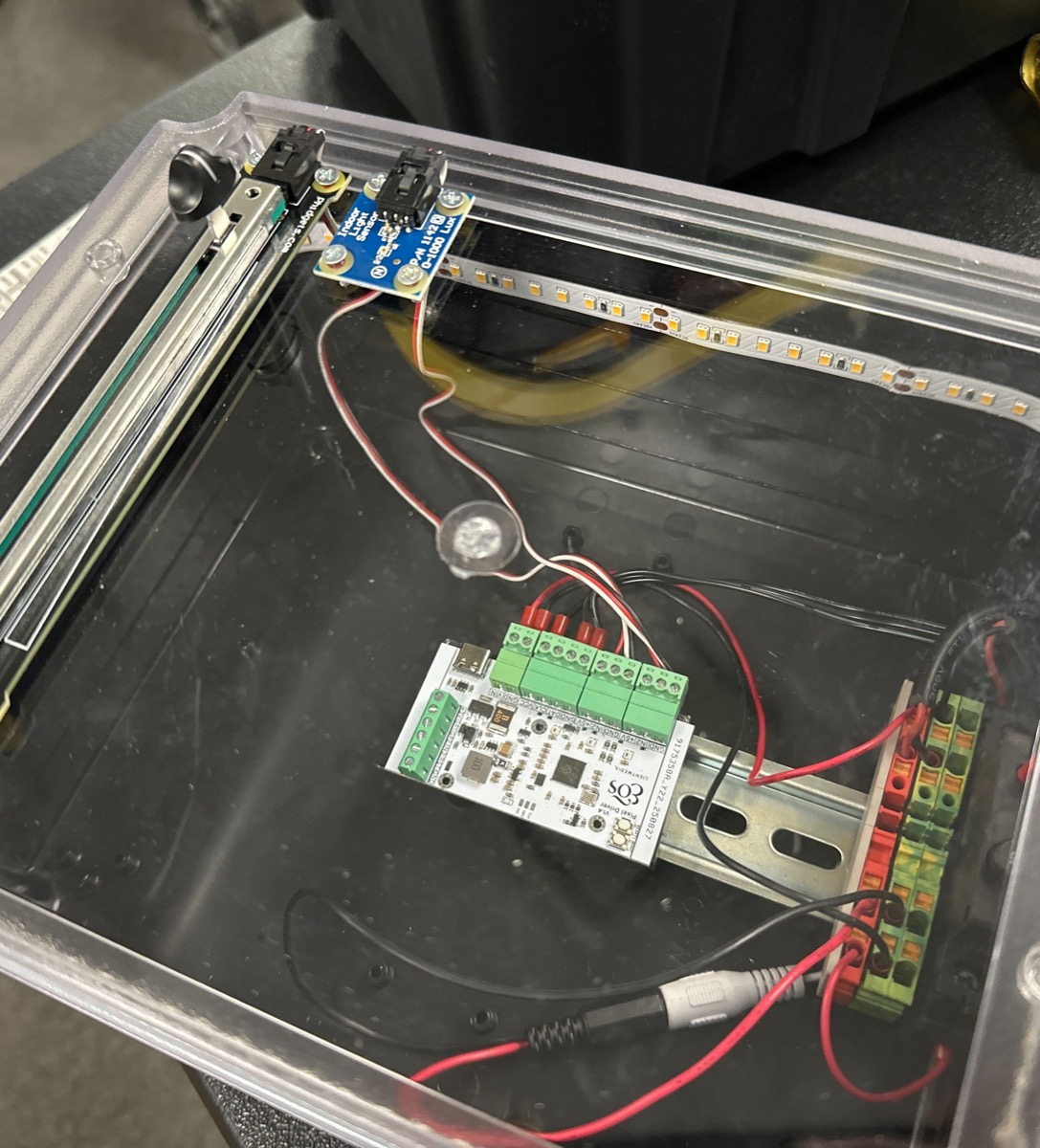
On-board status LEDs give real-time feedback without tools. Power glows steady blue. Render speed reads green at 60 fps, shifting toward red to show computational demand. Input levels read from blue to red as voltage rises.
A few of the protocols supported today. The list keeps growing — because we own the firmware, new protocols get added as the jobs require.
WS2812 / WS2812B
Single-line addressable RGB. The most commonly found pixel protocol today.
SK6812
Four-channel output with dedicated white for warmer tones and higher CRI in architectural applications.
DMX512 · RS485
Full universe output via UART adapter. Compatible with legacy and high-end stage fixtures.
APA102 / SK9822
Separate clock and data lines for high refresh rates and reliable timing over long cable runs.
…and more on request.
Set-and-forget lighting for lobbies, facades, and public spaces. Runs unattended for years without intervention.
Sensor-driven scenes that react to motion, proximity, or manual controls. Real-time input, real-time light.
A show controller or PLC sends high-level commands. The driver handles scene generation locally, cutting network and graphical load.
The Eos Pixel Driver is not an off-the-shelf controller with fixed capabilities. Because Eos Lightmedia owns the hardware and the software, every aspect of the platform can be tailored to your installation — from custom IO to audio-reactive effects.